
AI Follows the Culture | What CEOs Miss About Fear and Adoption | Brett Schklar


 Apple Podcasts
 Spotify
 Castro
 RSS Feed
 Your AI rollout will only be as healthy as the culture it lands in. Brett Schklar, CEO of GROW Powered and author of AI Without the BS, has talked with nearly 2,000 CEOs about AI. He explains why so much of the workforce is still afraid of it, why adoption starts with 1% wins instead of home runs, and why IT should not lead the charge.
TOPICS COVERED
- Why AI follows the culture you already have
- What fear of AI looks like two or three levels below the CEO
- Why 1% better each week beats swinging for home runs
- Thinking in tasks: small, medium, and the ones you thought were impossible
- Why small and mid-sized companies can now outrun big ones
- IQ, EQ, and what Brett calls Generation AI
- Who should own AI adoption, and why it should not be IT
- How to keep AI from becoming your echo chamber
(00:00) Welcome and Introduction
(00:24) Meet Brett Schklar, Author of AI Without the BS
(01:42) What Nearly 2,000 CEOs Taught Him About AI
(02:24) Why Most of the Workforce Is Still Afraid
(03:05) Get to First Base: 1% Better Every Week
(04:15) What Ignoring the Fear Costs
(06:43) Think in Tasks: Small, Medium, and Impossible
(09:33) Why Smaller Companies Can Move Faster
(10:51) AI Follows the Culture
(13:26) Does AI Erode Judgment?
(14:52) IQ, EQ, and Generation AI
(17:41) Who Should Own AI Adoption, and Why Not IT
(21:42) Show-and-Tell: The Use Cases That Spread
(23:15) Brett's Own Fear: Moving Too Fast
(26:14) The AI Echo Chamber
(30:17) One Thing to Leave With: 1% Every Week
(31:47) Where to Find Brett
FROM THE EPISODE
"If you have a bad culture and you put AI into it, and that culture has not been fixed, the AI is going to follow the culture." Brett Schklar
ABOUT THE GUEST
Brett Schklar is the CEO of GROW Powered and the founder of AI First Leadership, his speaking practice. He is the author of AI Without the BS: The CEO's Playbook for Actually Getting AI Right. He has talked with nearly 2,000 CEOs about AI, most of them leading mid-market companies, and has been a Vistage speaker since 2010. He previously built, scaled, and sold Market Creation Group, a Denver marketing agency, and co-chairs Denver AI.
ABOUT DONNA P. MITCHELL
Donna P. Mitchell is the founder of The Transformation Authority™ and CEO of Mitchell Universal Network, LLC. Forbes Business Council Member. Senior Executive Healthcare Think Tank Member. 49 years of enterprise transformation across five regulated industries and four transformation types, enabling 150,000+ professionals.
GET THE BOOK
Pivoting to Technology Adoption: Mind the Gap
pivotingtotechnologyadoption.com
CONNECT WITH BRETT SCHKLAR
Website: brettschklar.com
LinkedIn: linkedin.com/in/bschklar
CONNECT WITH DONNA
LinkedIn: linkedin.com/in/donnapmitchell
YouTube: @TheTransformationAuthority
Website: pivotingportal.com
Company: mitchelluniversalnetwork.com
NEWSLETTER
The Transformation Brief™
transformationbrief.beehiiv.com/subscribe
SPEAKING & ADVISORY
pivotingportal.com/speaker
LISTEN ANYWHERE YOU GET YOUR PODCASTS
Apple Podcasts, Spotify, Amazon Music, iHeartRadio, and every major podcast app
All episodes: pivotingtotechnologyadoptionpodcast.com
New episodes every Tuesday.
Forbes Business Council Member
PIVOTING TO TECHNOLOGY ADOPTION
EP134: AI Follows the Culture. What CEOs Miss About Fear and Adoption
Guest: Brett Schklar, CEO, GROW Powered | Author, AI Without the BS
Host: Donna P. Mitchell, The Transformation Authority
Published: Tuesday, October 13, 2026
FULL EPISODE TRANSCRIPT
Donna P. Mitchell (0:00): Welcome to Pivoting to Technology Adoption. I'm your host, Donna P. Mitchell, The Transformation Authority™. Every week I sit down with executives, strategists, and innovators to tackle the one problem no one's solving: why 70% of technology transformations fail. Let's pivot. Good morning, good afternoon, good evening, and welcome to Pivoting to Technology Adoption. Today we have Brett Schklar, and Brett, I'm so glad to have him here with me because he is an enterprise futurist.
Donna P. Mitchell (0:35): I haven't had any enterprise futurists with me in the audience, but he's the bestselling author, and I had loved the name, AI Without the BS, the CEO's playbook for actually getting AI right. I don't wanna talk anymore about this because I think he can tell us where he's been, what he's doing, and how he's doing it, and what the key takeaways are going to be in regards to enterprise and AI implementation, and adoption, just the whole thing. I just want him to talk about it. Say hello to your audience and ours.
Brett Schklar (1:08): Hello, Donna, and hello to everyone that's out there. So glad to be sharing some time with you, sharing some ideas, and hopefully giving some people some new and different ways to think about things.
Donna P. Mitchell (1:20): Well, new and different ways to think about things. The most important thing is for those that are listening that have the fear of AI, their projects have stalled, they're not sure what they've done wrong. So for those that are listening, how should they walk into this? How should they start their conversations ideally?
Brett Schklar (1:38): Yeah. So after— so I've spoken to nearly 2,000 CEOs. Most of them are mid-market, and mid-market CEOs who are not in the world of technology. They're in manufacturing. They're in operations. They're in retail. They're in the businesses that are the real businesses where the rest of the world of technology is sort of doing these things that are, you know, flights of fancy, and, you know, beyond. And I've learned a lot about what is working and more importantly, what is not working within the enterprise when it comes to AI adoption or overall transformation.
Brett Schklar (2:20): And so a couple of things that I see going on in working with and meeting with all these different CEOs, I see that AI is this thing that people are still afraid of. There's still a fear of AI. So while there might be, let's say, 12 to 15% of a company that's excited about AI, the rest of the 85 to 88% of the people are scared to death of what AI is gonna do to them. They're scared to death of how it's gonna take their jobs.
Brett Schklar (2:50): They're scared to death of how it's gonna change their workflow. They're scared to death that they're gonna show up on a Monday morning and things are gonna be very different and they don't know how to deal with different. And so the work that I've done, the impetus of the book is don't go try to swing for all those big fence, you know, don't try to swing the ball out the, you know, hit the ball out of the park. Don't try to get all these home runs, you know, early on with AI.
Brett Schklar (3:24): Slow it down. The work that we do, the results that we see when companies are adopting AI right is when everybody is getting onto first base. It's when the idea of AI is not these big monumental transformation changes. It is when people are doing things 1% better each week and maybe 5% better each month. And they're finding the things that are a pain in their butt when it comes to working and using AI to solve those little things to take things off their plate that are annoying anyway.
Brett Schklar (3:57): And when people are starting to do that, when they're starting to think smaller about solving the problems, then as you start to think bigger about AI, it's less scary, and it's less daunting. So that's the big thing that I'm finding.
Donna P. Mitchell (4:12): So CEOs maybe miss it, or the mood, but the fear is there. Because they ignore it or act like it's not there, what does that really cost them and the company?
Brett Schklar (4:27): I'll tell you, this is where I spend most of my time. I do a lot of keynote presentations to associations. I also do a lot of workshops. I think you and I were talking about, like Vistage's example and some other workshops that I lead. And this is the number one thing that I really start with and I focus on is when there is the fear. And when it comes to AI, that fear is everything from the Terminator to, you know, who changed my process in my email, right?
Brett Schklar (4:57): Who changed the way that my email looks when I show up Monday morning and all of a sudden my Outlook is looking a little bit different because there's this Copilot thing that's trying to tell me everything to do? But that change and that fear that's caused from that change is something that I spend a lot of time trying to help educate CEOs to step back and say, put yourself in the shoes of the employees, put yourself in their lens and see how the big bold changes that you may be making, Mr.
Brett Schklar (5:35): or Mrs. CEO, are scary to a lot of employees, especially ones that are 2 or 3 levels below a CEO who might have seen an email come in from a CEO about this big, bold initiative. And the CEO thinks it's exciting. But the reality is, for the typical employee, the question is, where does this affect me? How do I fit into this? Is it coming for my job?
Brett Schklar (6:06): So honestly, and I think you probably know this as well, and maybe even better than I do, Donna, transformation or trying to find ways to get successful transformation is just as much getting people on board and understanding and feeling like they are a part of the change versus the recipients of the change.
Donna P. Mitchell (6:25): I think that's the main key right there. Usually the workforce and everything that needs to take place with them hasn't happened or it happens after Everything's been put in place, and then you wonder why it's not working and people aren't jumping on board because they weren't included. So when you think about everything that you've observed and the people that you have talked to, for someone that's listening, are there 3 elements that you think they should really think about when they're bringing AI into the company and they're about to have their meeting in C-suite and they've got all their— leadership, and visionaries there?
Donna P. Mitchell (7:02): What is the most important 3 elements?
Brett Schklar (7:06): So I think that the most important thing, because this addresses the fear people have that AI is coming for my job, the most important thing is that it's not that AI is not coming for people's jobs. AI is eliminating tasks and speeding up tasks. So think about the tasks that you have to accomplish and where AI can really help solve some of those tasks.
Brett Schklar (7:38): So number one is think of the world as tasks. There's small tasks, there's big tasks, and there's mega tasks. So the easy tasks, the small tasks, that's where AI can really help. And so don't think about it as rewiring your entire world. Just think about it of, hey, maybe I don't have to go into all my emails every morning to find— the hidden bombs or the hidden awesome things that are about to reshape my day?
Brett Schklar (8:09): Go into Copilot or go into whatever AI system is looking at your email and ask it, hey, what are the things that I need to know about to prioritize my day? Yeah. So those little things can really have a big impact. So you think about it as the small task, and then there's the medium tasks. The medium tasks are, oh, I've got a big project to work on. What could AI do to help me solve this week-long project or this month-long project to make it faster and easier?
Brett Schklar (8:40): And then the third thing is start thinking about the things that you used to think were impossible to do. And this is where it gets to be fun. This is where it gets to be a team-building exercise. This is where months ago or years ago, somebody said, there's no way we could ever do that because we don't have the resources. We're not as big as our competitor. Now you've got this unlimited source of intelligence, and I would like to talk about the idea of artificial intelligence versus human intelligence. Let's just put a bookmark in that for a second. But when you've got this vast resource of unlimited intelligence, are there things that you as a company or as an employee thought were impossible that now not only are possible and doable, but could give you a competitive advantage against competitors who are moving really slow?
Brett Schklar (9:33): And this is the other fun part of it. I work with really big companies. I'm working with a $3 billion company that says they want to embrace AI, but there is so much organizational dysfunction that AI is not gonna solve the fear of stepping on people's toes or the fear of moving too quickly. And so I think the small companies, the medium-sized companies, the small companies that used to say, we can't compete with these big folks because, you know, that we're just a little tiny, you know, little tiny boat and they're a big, you know, cruise ship.
Brett Schklar (10:07): Well, now these small companies who have the ability to use it and adapt and take that knowledge and that intelligence from what AI is giving them and put it into use, they can move a lot faster than these big companies. So I think that the small and medium businesses should be in their hot girl summer right now, right? Should be having their, like, their fun time to where they're thinking about how they can really solve big problems with unlimited intelligence to go after the marketplace that the big people have been holding onto, and they now have their size as a major disadvantage.
Donna P. Mitchell (10:51): So, I'm glad you mentioned the dysfunction of a company, 'cause, you know, having worked in major industries, the best companies sometimes are really kind of dysfunctional and they need to change. They really need a real culture change first, I think, before you start bringing in the new technology on top of everything else that's going on. Have there been any conversations about that? Have you encountered that and worked with CEOs who realize, look, we really need to do a culture change first, or we need to work on the dysfunction first, or are they very apprehensive or ignore it, or they just with the dysfunction, the silos, and everything in the dynamics that's going on, 'cause they used to it.
Donna P. Mitchell (11:34): I'm trying to be polite.
Brett Schklar (11:34): Yeah, no, AI amplifies. If you have a crappy process and you add AI onto it, you have a faster crappy process. If you have a bad culture and you put AI into it, and that culture has not been fixed, the AI is going to follow the culture. Yeah, man, you in trouble for sure. So, so I, I think you've gotta, you know, the symptom, you know, versus the root cause.
Brett Schklar (12:04): And so I think there are some challenges and opportunities, but you nailed it, Donna, is that, you know, broken processes can do broken stuff faster with AI. And if you don't fix it or think about the end result, what I tend to do, where I tend to have the most impact is when a CEO brings me in and says, hey, Here's what success looks like. Here's what a happy customer looks like.
Brett Schklar (12:36): Here's what a successful implementation looks like. I don't care about how we get there. I want to make sure that we get to this thing that aligns with a company's values, right? That allows their— aligns with their values. It might be better customer experience. It could be better operational excellence. It could be the best place to work, whatever that that true core value of a company is. If a company doesn't truly believe that, AI is just gonna amplify whatever it is that people are using or seeing.
Brett Schklar (13:09): So yes, it, when people, when CEOs are saying this is a once in a lifetime opportunity that we can scale what's broken or we can scale something that we're fixing, that's where it gets to be very interesting.
Donna P. Mitchell (13:24): So this kind of just ran across my mind with AI, with artificial intelligence and superintelligence, and you have the intelligence and then people think you lose judgment. And I don't understand that in some ways because I'm a critical thinker, but maybe everybody's not a critical thinker and they just rely on what AI says. And I push back, we go back and forth. It's like, no, you didn't say that before. Why did you say that now? I don't think that's right. Or look, I'm in the conversation with AI. It's kind of odd, but I'm getting used to it.
Donna P. Mitchell (13:56): But at the end of the day, when people are involved with AI, where do you fall? Do you really feel people lose judgment? I'm curious to know from your observations, is that really what's happening? Because I really had the belief that if you're a critical thinker and you know what you're doing and you've had experience, it's going to enhance who you are. You're going to be able to think out the box.
Brett Schklar (14:18): Yeah.
Donna P. Mitchell (14:21): 30,000 feet up. Now you're 60,000, 90,000 feet up. So depending on who you are, it's going to enhance and give you all the abilities that you didn't have before. So what you said earlier, you just need to go on and think about all these repeatable processes and you can really go all the way live with it. Where is that falling right now with the conversations in the last few weeks and using superintelligence and artificial? And I think there's still a lot of judgment there. But a lot of people tend to disagree. What do you think?
Brett Schklar (14:50): So the way that I see things going forward, and remember, I spend a lot of time with companies, and so I think about how companies can benefit from this. You know, I want people to think about the word intelligence. There's artificial intelligence and there's human intelligence. And it used to be that a company was looking for people with higher IQ. They were smarter, maybe more book smart.
Brett Schklar (15:21): But now with AI, we have a basically unlimited amount of intelligence or IQ. However, what we— and so if that's unlimited, if IQ is basically unlimited or charged by the token or the, $20 a month fee or $30 a month fee, then we as humans have to bring our EQ or emotional quotient to the table much more than ever before.
Brett Schklar (15:51): And that's where judgment and wisdom and asking better questions to AI really helps us out. So when I work with companies, one of the things we look at is how do we change the people we're recruiting for? How do we change the organizational makeup to sort of divvy up people to be better balanced? And the people with high IQ and low EQ, they're gonna have a tough time over the next couple of years, just to be absolutely honest.
Brett Schklar (16:27): The value that they brought in the past is not the value that they'll bring in the future as much. The people with a higher EQ, or the ability to have a judgment, or the ability to bring experience of how to work with humans is going to be the game changer. And it's actually in a chapter of my book, I call it Generation AI. And Generation AI is not an age band demographic. It's not an education band demographic.
Brett Schklar (17:01): It's people who understand that you have unlimited amounts of intelligence at your fingertips, but what you do with it using your EQ or your AIQ, like how to use it, is really what makes all the difference in the world. So that's my theory. That's what I am betting on is that people who know how to use unlimited intelligence are gonna be the ones that really succeed going forward and will lead an organization going forward.
Brett Schklar (17:31): But the people with really high IQ are gonna be competing with AI.
Donna P. Mitchell (17:41): Hmm. Okay. So let me ask you this. Who should own it in the company? Who owns the adoption? Who owns making it happen the way it's supposed to happen and making sure that the staff, the workforce, the leadership, everybody's in line? Who really owns that? The CEO seems like they own it, and I don't think they should own it. Who owns it?
Brett Schklar (17:59): So, the people you should not bring in, and I've got a funny story about this, you should not bring in IT to lead the charge.
Donna P. Mitchell (18:07): Thank you.
Brett Schklar (18:12): So, and I'll tell you, like, and this has changed over the last few years, 'cause I've been doing this for about 2 and a half, 3 years now, of running these workshops and meeting with CEOs. And early on, you know, I'd bring a CEO group together and they'd be like, hey, should I bring my IT group to this? And I said, sure, as long as you want all of your AI initiatives to fail. And they're like, what do you mean? And my feedback is, look, I come from the world of IT. I come from the world of technology.
Brett Schklar (18:44): Really good IT people are there to mitigate risk. They are there to eliminate variables of unknowns that could cause a risk to a corporate enterprise. AI is risky. AI is very, is changing very quickly and faster than IT organizations could actually adopt and adapt. I've got a lot of buddies that are IT executives and IT directors and CIOs. And, and when I was drafting my book, I said, hey, I want you to read my book.
Brett Schklar (19:18): And they would, and they're like, this thing sucks. I'm like, good. Perfect. 'Cause I wrote it for the CEO. I wrote it for CEOs and 6th graders. In other words, it's such an easy, quick read that CEOs who have a lot of stuff going on, they can get, you know, they can read it in an afternoon. But this really manifested itself a couple of weeks ago. I was running a workshop for a food manufacturing company in California. And 2 of the IT people were in my workshop where I talk about, you know, don't bring IT because they are going to make sure that AI fails.
Brett Schklar (19:52): And I give the reason why, that their job is to mitigate risk. And then I went out to dinner with the group of people afterwards, and I thought the IT people are gonna be like throwing food at me or spilling my wine by accident. And so they actually said to the CEO between the end of the workshop and the next meeting, they said, you know what, Brett is right, and we've been trying to roll out AI wrong the whole time. Brett's approach is you build a center of excellence.
Brett Schklar (20:22): Brett's approach is you bring a peer group together to really help learn collectively how to use AI. So it becomes this bottom-up initiative instead of a top-down initiative. And the 2 IT people that came to this workshop, they were the ones who said, hey, CEO, listen to Brett, get this crap off our plate because we're just gonna be the enemy of the state here if you have us keep doing this. And the CEO actually listened. So I do think, now back to your question of who should be doing it, I do think it needs to be led by the CEO from a vision perspective.
Brett Schklar (21:00): But it needs to be HR, or it needs to be a chief of staff, or it needs to be maybe a COO that really drives the day-to-day adoption to make sure that we're not trying to do things too big and we're measuring the satisfaction or the confidence that employees are having in AI over time.
Donna P. Mitchell (21:29): That sounds like that could work from a visionary standpoint. Because at the end of the day, from what I found, there really isn't anybody who handles the adoption piece. And I agree with you, it should not be IT. So based on your conversations, observations, and the workshops that you've had, what are some of the trends that you think are going to be coming in the future that we need to be prepared for or have a heads up on?
Brett Schklar (21:56): Yeah, I think that we need to get out of— so there's such a difference in the people that follow AI and the people that fear AI. We've gotta figure out how to close that gap. But I think that the businesses, what they need to be looking at is less about the model versus model versus model. And more about the actual practical use cases of somebody doing something different. Hey, I brought AI facilitator Copilot, you know, with me to a meeting and it assigned all the tasks at the end of the meeting automatically for me.
Brett Schklar (22:34): Or, hey, I started going to Copilot at the beginning of my day, or I went to Gemini at the beginning of my day and asked it to help me prioritize my day instead of diving into the deep end of email to start my day. Those little things, those use cases, we need to do as more show-and-tells within companies and get people less afraid of the technology and less concerned about the technology and more feeling like, this is how it changed my day.
Brett Schklar (23:06): This is how it changed my, you know, the time of my day for the better. And that's where we need to head to.
Donna P. Mitchell (23:15): So where, in your own reflection of self, where is the fear with you? Is there any fear on what you've seen, what you've heard, what you've learned, what you observed, what people don't wanna say out loud? What do you wanna tell me out loud?
Brett Schklar (23:36): It's pretty interesting when I go and speak to groups, I usually, whether the groups have a scoring system to score the quality of my workshop presentation or I do it myself in my keynote presentations. It's early on, a lot of the feedback I would get was less about me and my presenting. It was more about that I was this manifestation of AI. And so therefore I am the evil person that's trying to push AI down people's throats.
Donna P. Mitchell (24:11): That's interesting.
Brett Schklar (24:11): Yeah. Yeah. It was really interesting. I would get these like, because I would feel like go deeper and have like better conversations. Then all of a sudden the scores would come back and it would be really high scores and really low scores. And we look at the comments from the low scores, it was, I don't believe that AI is really going to have this big of a change. I don't know why we're being asked to do all of this AI stuff. And I'm like, oh, they're giving feedback to AI, not to the facilitator or the presenter. So my fear, and I think it's a really great question and it scares the hell out of me to answer it, honestly.
Brett Schklar (24:46): is that people are gonna be moving too quickly. They're going to think that AI is evil. We're already getting a lot of this. And so I personally am trying not to, 'cause I've got a small company, I'm using AI for a lot of things. Sometimes I go too far and I go too fast trying to get it to do some sales initiatives. I wanna get to know you. Some follow-up initiatives. And so for me, my fear is that I'm, is the same fear that I think other people have and the same fear that I want people to have, which is I fear that I'm gonna be moving too quickly and I'm gonna take humans out of the loop too quickly and things are gonna get automated that shouldn't be automated.
Brett Schklar (25:32): With human interaction, with interactions with prospects, with customers, I believe that should not be automated. with understanding how to manage your business and where your business wants to go, you can ask Claude or you can ask ChatGPT, but, and it might give you some interesting ideas, but don't let it be the driver. Just let it be a sounding board. And so my fear is that I'll get too deep into it and think that it's the genius or it's making me the genius, and I'll go down the rabbit hole of the direction it wants me to go.
Donna P. Mitchell (26:14): That's interesting because I'm kind of curious on when do you sense you've gone too far? Is it when it's got too much power in decision-making or you've taken the human out of the loop or the human should be in the loop and you're managing a workaround so they're not in the loop? Can you give us a, if you don't mind, I'll give you a little bit more detail. Or can you paint us a picture, as they say in sales?
Brett Schklar (26:40): Yeah. So, and there's so many—
Donna P. Mitchell (26:40): Give us a picture.
Brett Schklar (26:44): There's so many like TV shows that talk about AI and they have these great jokes about how it tries to make you, you know, the goal of AI is to try to make you happy. And the goal of AI is to help you feel good. So for those of us who use the voice assistant part of AI, So for example, I talk with my AI system about my business all the time. When I'm on dog walks, I'll either listen to podcasts, you know, great podcasts like yours, or I'll call somebody just to catch up or see what's going on.
Donna P. Mitchell (27:19): Thank you.
Brett Schklar (27:19): Or I will have a conversation with my AI assistant. It's like, oh man, that's a great idea. You know, we should really think about that and blah, blah, blah. And so if you think about the idea that with generative AI, especially when we're chatting with it and interacting with it, its job is to try to make you happy. And it's almost like, have you ever dated somebody and they say so many great things about you that you start to like wonder if they really have something bad to say or if they're really being genuine?
Brett Schklar (27:49): It's like that. And so my fear is, is you get this, you get in this like echo chamber of, or this, The echo chamber of hearing yourself talking and hearing AI give you the confidence about these ideas that might not be that great of an idea, but it sort of makes it seem like it. And you get sort of stuck in your own echo chamber and you go down that rabbit hole.
Donna P. Mitchell (28:19): I can see that happening, but I guess I push back. I call out their inconsistencies or they start drifting. And then I'm glad you shared that. Thank you. I was curious because at the end of the day, I think it's important that you get the objective information or train the AI to who you feel is going to complement you to reach your goals. So if it is that $300,000, $500,000 advisor, And it pushes you or calls you out and keeps it very realistic.
Donna P. Mitchell (28:56): I would hate to feel like, and I've had that happen to me, so thank you for sharing it. That's how it's made. I didn't know that. In complimenting or saying, do this, this, and this. And then I'll say, well, no, that doesn't make any sense. The relationship is this, this, and this. And it says, yeah, do that too. Then I'll ask it, well, why did you tell me to do both? You should have told me that the first time. And then we'll go back and forth. But I don't think a lot of people would push back or recognize when it's drifting or inconsistent or just kissing the ring.
Donna P. Mitchell (29:34): That's the best way I could say it. We're broadcasting. I don't want anybody to kiss the ring.
Brett Schklar (29:42): That's a good way to say it. And that would concern me. This is where EQ, this is where wisdom, this is where you say, I need somebody to say, I need somebody to maybe be a devil's advocate or somebody to challenge me or something along those lines. But when you're especially, and this is especially with the voice AI assistant, when you're talking to AI, boy, it really Its job is to make you think that you're the greatest thing since sliced bread.
Donna P. Mitchell (30:17): Wow. That's good to know. So what is it that you'd like everyone to leave with as we close?
Brett Schklar (30:25): For the business leaders that are out there that are struggling, that are feeling like they're afraid of AI, that they're afraid of where it's going to go, or they don't know how to really get their ideas in place, this is very simple. Your job, your mission, should you choose to accept it, when it comes to AI and helping your business transform for the better, is to focus on eliminating the fears of AI by getting people to try small things.
Brett Schklar (30:58): The 1% thing every week, look at what can I do to have AI week help me be 1% better? Maybe it cleans up my emails a little bit better. Maybe it prioritizes my day a little bit better. Maybe it looks at some reports and has a couple of ideas about reports before I even have to look at it. These little things that can move the needle 1% every week. After 52 weeks, you have 68% productivity improvement.
Brett Schklar (31:34): Don't think big, think small, and you will see how it really amplifies in your organization.
Donna P. Mitchell (31:42): I hope you come back. I've really enjoyed the conversation. How can people reach you?
Brett Schklar (31:47): I'm pretty easy to find. So my name, B-R-E-T-T-S-C-H-K-L-A-R. Search for me on LinkedIn. I'm the only Brett Schklar there. You can also go to brettschklar.com, or you can always shoot an email to me to brett@aifirstleadership.com, all one word. And I would love to hear from you, love to hear back. And yeah, those are a couple of ways.
Donna P. Mitchell (32:14): Well, I'd like to thank you for coming on Pivoting to Technology Adoption. So I hope you do come back. And thank you so much.
Brett Schklar (32:22): Thank you, Donna. Really appreciate it.
Donna P. Mitchell (32:25): And I hope everybody really enjoyed it. And we're shaping tomorrow together. Thank you. Thank you for listening to Pivoting to Technology Adoption. If this episode gave you something to think about, subscribe, leave a review, and share it with a colleague who needs to hear it. My new book, Pivoting to Technology Adoption: Mind the Gap, is available now on Amazon. Visit pivotingportal.com to work with me directly. I'm Donna P. Mitchell, The Transformation Authority™. Until next time, mind the gap.
GUEST
Brett Schklar
Brett Schklar is the CEO of GROW Powered and the founder of AI First Leadership, his speaking practice. He is the author of AI Without the BS: The CEO's Playbook for Actually Getting AI Right. He has talked with nearly 2,000 CEOs about AI, most of them leading mid-market companies, and has been a Vistage speaker since 2010. He previously built, scaled, and sold Market Creation Group, a Denver marketing agency, and co-chairs Denver AI.
Website: brettschklar.com
LinkedIn: linkedin.com/in/bschklar
Author
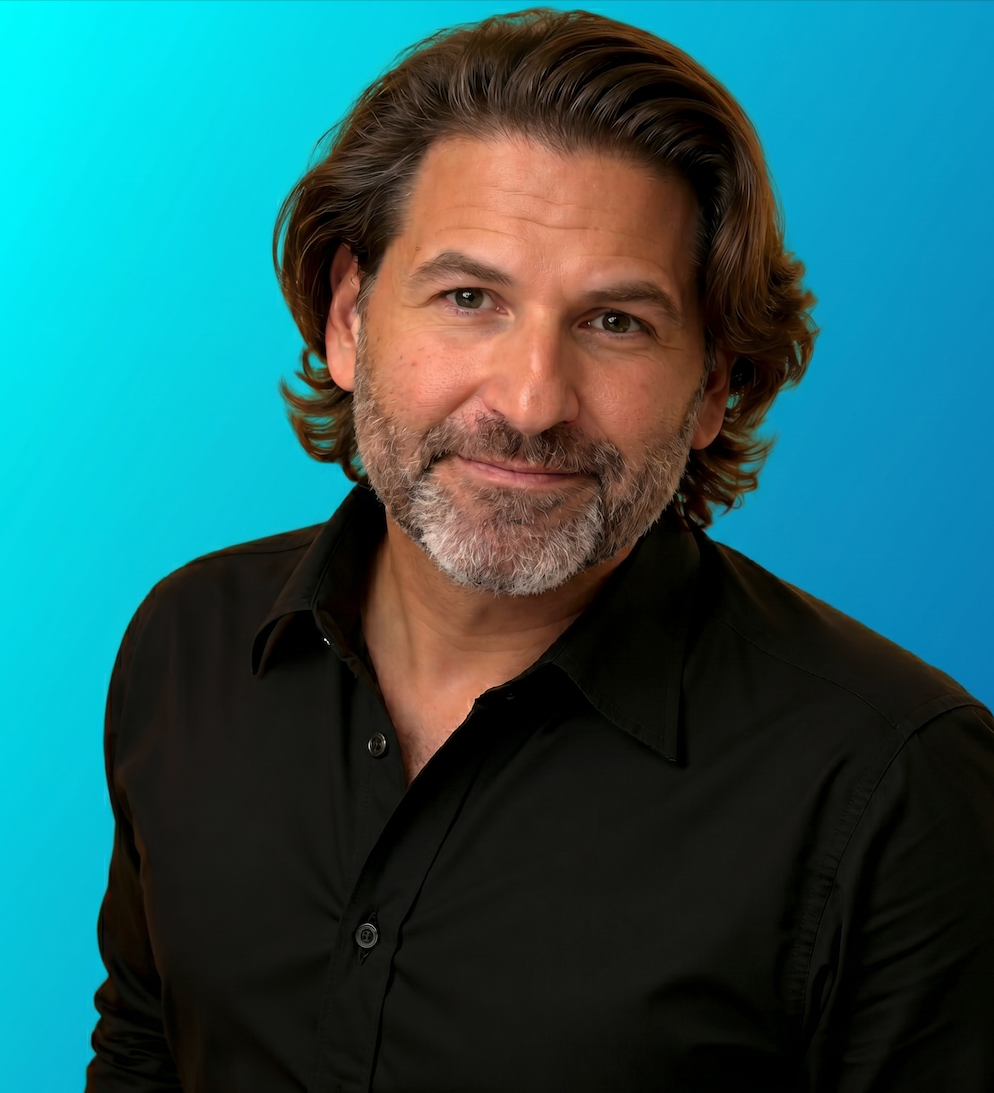
Brett Schklar is an Enterprise Futurist and bestselling author of AI Without the BS: The CEO's Playbook for Actually Getting AI Right. He works with enterprise leaders ready to stop fearing tomorrow and start building it. Over the last two years he has had one-on-one conversations with close to 2,000 CEOs navigating the biggest technological shift of their careers, and keeps landing on the same conclusion: the deciding factor is the drive and judgment of the leadership team, far more than the technology stack.
A CEO who built, grew, and sold his own company before founding GROW Powered, Brett is the rare futurist who speaks as a peer to the room rather than an observer of it. His keynotes are part strategy session, part stand-up, part halftime speech, giving enterprise audiences research-backed optimism and a clear plan for what comes next.